
In working with hundreds of churches across the USA over the last 35 years, and through online forums covering tens of thousands of pastors and church security and safety leaders, I get more questions about the naming and functional scope of church security teams and church safety teams than any other topic. That is especially true now, with insurance coverage questions popping up everywhere.
I was recently published in ASIS International’s Cultural Properties Q3 newsletter on this topic. [ASIS link: TBD]
If you have read any of my publications, heard me speak, or been through my security training, you already know my standard definitions. You or your organization may not like them, but I try to stay consistent and set a personal standard that others can use, and many have.
Security: The prevention, detection, and response to a crime or a violation of an organization’s rules or policies.
Safety: The prevention, detection, and response to an accident. Think spilled milk, broken glass, and similar.
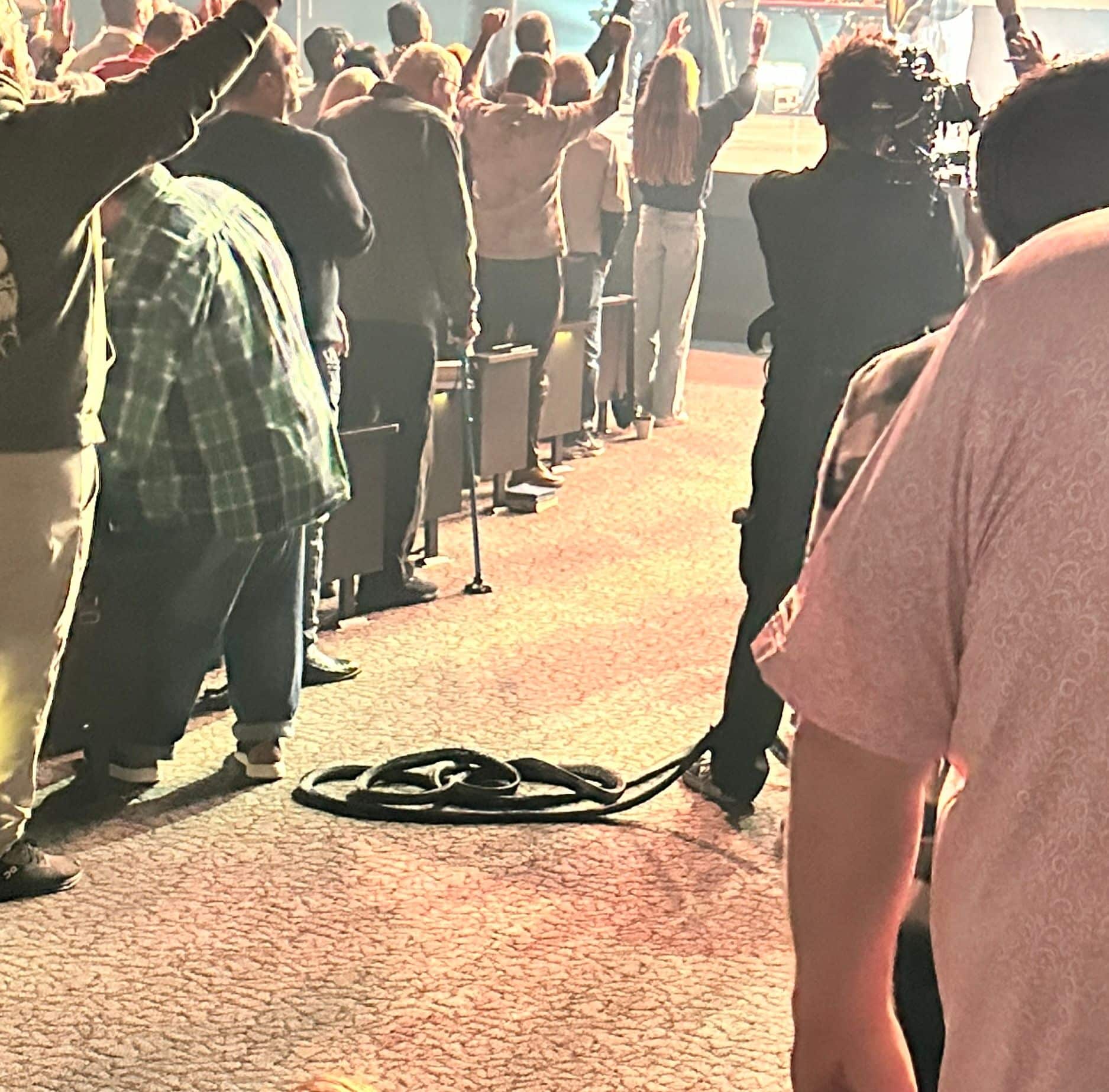
But what about a real-world example of the challenge facing organizations, particularly houses of worship? Here is one from a recent visit.

This photo was taken during a recent service at a house of worship I provide security support to. A camera operator is filming the service, with a cable run, or “snake,” to their left. Between a camera operator focused on keeping the shot in focus and a cable across the aisle, that is a real opportunity for an incident. Agreed?
So for your house of worship security and safety program, would this setup be a challenge if you had a safety incident, a medical incident, a security incident, or a panic? The probability of additional incidents from a setup like this is high. So here is the challenge:
Who is responsible for mitigating or correcting this during the middle of a service? And which policies, procedures, and training cover it?
- Your safety team?
- Your security team?
- Neither?
Who would spot it? Are there team members constantly looking for vulnerabilities like this one?
If the people responsible for safety (using the definition above) don’t address it, could it cause a problem if a security or medical incident happened at the same time? If the people responsible for security don’t address it, could it cause an additional safety or medical incident?
Oh, and I should mention that this was NOT a normal service. What if this were a funeral on a Tuesday at 9:00 a.m.?
So, as I try to educate pastors and houses of worship leaders, what you call your team and how you train it is very different from what you call your program and the scope of the team or teams. Is the safety team responsible for security? Is the security team responsible for safety? Or is it _______?
If this scenario gives you pause or additional confusion about your team’s roles and responsibilities, please, I beg you, pause, rethink the full scope of your governance and training. Something to consider for your house of worship: safety and security are 24x7x365 functions that need to be managed by senior leadership.
For the same naming question from the organizational side, see Security Team vs. Safety Team — What’s in a Name?
If you have questions, please reach out. I am glad to help, as always.
Jim McConnell
jim@askmcconnell.com
https://askmcconnell.com